Request a consultation

TL;DR — How to Measure for Replacement Windows (and Choose Full-Frame vs Insert) in Colorado
This guide explains how Colorado homeowners can measure for replacement windows and decide whether an insert replacement or full-frame replacement makes the most sense for their home’s condition, comfort goals, and budget.
Key takeaways:
- Insert replacement windows fit inside an existing frame and work best when the existing frame is square, solid, and not water-damaged.
- Full-frame replacement windows replace the entire unit and make sense when there is rot, water intrusion, or you want to change the window size or style.
- Measuring correctly means using multiple points and planning for out-of-square openings.
- Colorado homes often need extra attention to water management because wind-driven weather and strong sun punish weak flashing details.
- Your measuring method should match the replacement method (insert measurements differ from full-frame rough-opening measurements).
- Safety matters when measuring above grade, especially around ladders, decks, and walk-out basements.
- A quick pre-measure checklist reduces bid confusion and helps you get apples-to-apples quotes.
Measuring for replacement windows sounds straightforward until you hit real-world conditions: older frames that are not perfectly square, trim that hides damage, and openings that have shifted over decades. This guide lays out a practical measuring approach for homeowners and explains the key decision behind the tape measure: whether you are buying an insert replacement that fits inside your existing frame or a full-frame replacement that removes the entire unit.
Replacement window measurements start with choosing insert vs full-frame
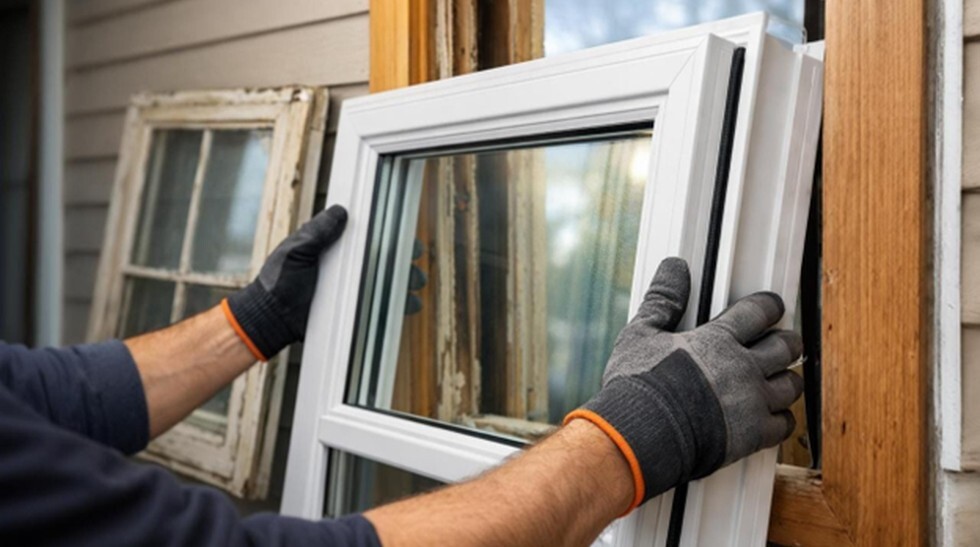
Replacement window measurements start with deciding whether the project is an insert replacement or a full-frame replacement, because the reference points and tolerances are different.
If you measure like you are doing an insert but you actually need a full-frame, the numbers will not map cleanly to what the installer needs. If you measure like you are doing a full-frame but you end up doing inserts, you can waste time exposing areas that did not need to be disturbed.
Insert replacement windows are built to fit inside the existing window frame, which means the existing frame becomes the “box” your new unit must match.
Insert replacement is most appropriate when:
- The existing frame is solid, not rotted, and not water-damaged.
- The opening is reasonably square.
- You want less disruption to interior trim or exterior finishes.
- You are not changing the window size.
Insert replacement is usually faster and can be less expensive, but it depends on the condition of what you are keeping.
Full-frame replacement windows replace the entire unit down to the framing

Full-frame replacement windows remove the entire window assembly so the installer can address the rough opening, flashing, and any hidden damage before setting a new unit.
Full-frame replacement is usually appropriate when:
- The existing frame has rot, soft spots, or water staining.
- You suspect flashing problems or repeated leaks.
- You want to change the window size, style, or placement.
- You are already replacing siding, stucco, or interior trim.
Full-frame can cost more because it is more labor and finish work, but it is also the method that lets you truly “reset” water management and air sealing.
Measuring safely matters because falls happen fast, and working on ladders, decks, or second-story openings adds risk even during “just measuring.”
If any measuring requires work on elevated walking/working surfaces in a construction context, OSHA’s fall protection standard addresses protection at 6 feet or more above a lower level in many construction situations.
For homeowners, the practical takeaway is simple: do not lean out of openings, do not overreach on ladders, and do not measure anything that requires unsafe positioning—take photos, measure from safer reference points, or have a professional handle that portion.
Measuring for insert replacement windows uses the existing frame as the reference
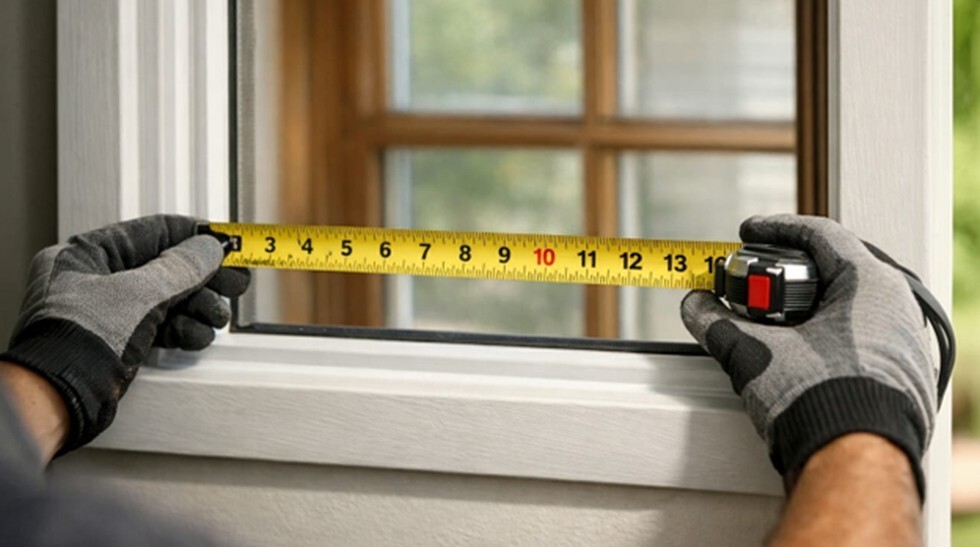
Measuring for insert replacement windows uses the inside of the existing frame as the key reference, because the new window must fit cleanly within that opening.
- Tape measure (preferably with a stiff blade)
- Notepad or phone notes
- Level (or a straightedge)
- Step stool (safer than stretching)
- Flashlight (to inspect corners and sills)
Step 1: Measure width in three places
Measure the inside width of the frame at:
- Top
- Middle
- Bottom
Write all three numbers down and use the smallest width for ordering guidance, because out-of-square openings are common.
Step 2: Measure height in three places
Measure the inside height of the frame at:
- Left
- Middle
- Right
Again, record all three and use the smallest height as the working number.
Step 3: Check squareness and level
A quick check for squareness helps you understand whether the installer may need extra adjustment, shimming, or a different approach:
- Compare diagonal measurements (top-left to bottom-right, and top-right to bottom-left) if you can access clean corners.
- Look for visible gaps, uneven reveals, or a sill that is not level.
Step 4: Inspect the sill and lower corners
The sill and lower corners are where water damage often shows first. If you see soft wood, staining, bubbling paint, or recurring condensation that has damaged the frame, insert replacement may not be the right method.
Measuring for full-frame replacement windows focuses on the rough opening
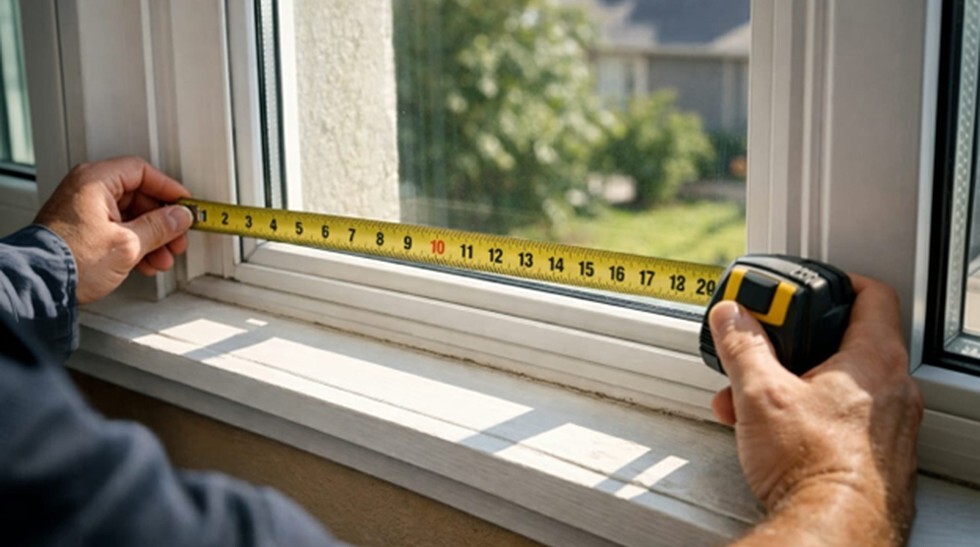
Measuring for full-frame replacement focuses on the rough opening, which is the framed opening behind trim and exterior finishes.
Homeowners often cannot access the true rough opening without removing trim or exterior materials, so the most useful “homeowner measure” for early budgeting is:
- Record the visible frame-to-frame size.
- Record the glass size (visible glass area) as a secondary reference.
- Photograph interior and exterior trim conditions, especially at the sill and head.
A full-frame quote typically requires a site visit because the installer needs to confirm what is behind the finishes and how water management will be rebuilt.
Full-frame vs insert decisions are best made by the condition of the existing frame and the water management details, because those factors determine whether you are building on a solid foundation.
Insert replacement is often the right call when
- Frames are structurally sound and dry.
- You want minimal disturbance to finishes.
- You are solving drafts and comfort issues without signs of leaks.
Full-frame replacement is often the right call when
- There is any rot, softness, or repeated leak history.
- You see staining at the head or sill.
- You want to change sizes, add egress, or reconfigure openings.
- You want the cleanest path to modern flashing and air sealing.
Colorado-specific measuring and planning details matter because sun exposure, wind, and winter heating demands amplify small mistakes in air sealing and water control.
If you live along the Front Range, pay attention to wind exposure and sun-facing elevations. If you live in mountain areas, pay attention to snow, ice, and freeze-thaw effects around the sill and exterior trim lines. In any region, clear photos and notes about existing conditions help your installer plan the right approach and help you avoid vague quotes.
A simple pre-quote checklist helps you get accurate bids
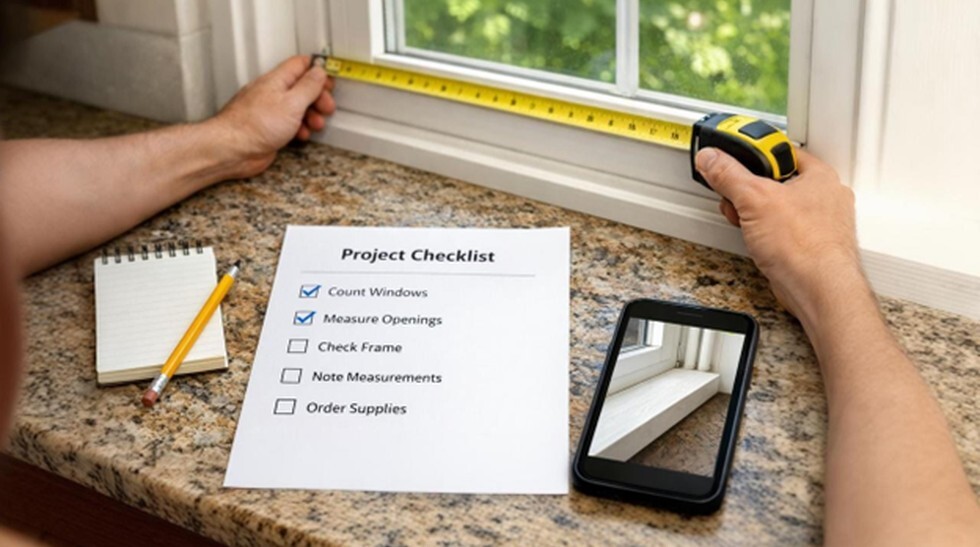
A simple pre-quote checklist makes it easier to compare installers because it documents the basics the same way every time.
- Count total windows and note which ones open vs fixed.
- Label each opening (Kitchen-1, Living-2, etc.).
- Record width/height measurements and note “out of square” concerns.
- Take photos: straight-on interior, straight-on exterior, and close-ups of sills and trim.
- Note any known leak history or condensation issues.
- Decide your preference: keep interior trim, change trim, or leave flexible.
When you are ready to measure and plan your replacement windows in Colorado, start by deciding whether your home is a better fit for insert replacement or full-frame replacement, then measure in multiple points, document anything out-of-square, and prioritize safety over “one more measurement.”
If you want a professional measurement and a clear recommendation on full-frame vs insert for your specific openings, book a consult today.
Related Posts