...
Request a consultation

Custom Features that Matter in Colorado: Hail-Resistant Glass, Noise Control & Security Upgrades

Colorado homeowners should prioritize laminated safety glass, tighter air sealing, and upgraded locking hardware because those three upgrades directly address hail breakage, outside noise, and forced entry. Colorado’s weather and elevation make “standard” window packages feel fine on paper but underperform in real life, especially on the Front Range.

Key Takeaways

Key takeaways are that laminated glass improves post-impact safety, sound ratings (like STC) help compare noise control, and proper flashing/air sealing often matters as much as the glass package.

  • “Hail-resistant” usually means stronger glazing choices, not “hail-proof.”
  • Laminated glass is a safety glazing type recognized in federal glazing safety standards.
  • STC is a standardized sound rating based on ASTM methods, so it’s useful for comparisons.
  • Air leaks around the frame can undermine noise control and comfort.
  • Flashing and water management details prevent hidden wall damage around windows.

Why do Colorado homes need different window upgrades?

Colorado homes need different window upgrades because hail risk and weather swings are unusually high across the Front Range, and that changes what fails first. The Rocky Mountain Insurance Information Association notes the Front Range is in “Hail Alley,” with recurring catastrophic hailstorms and billions in insured losses over time.

That doesn’t mean every home needs the most expensive glass available. It means your upgrade money should go to the failure points Colorado is famous for: impact events, drafts, and comfort issues.

What does “hail-resistant glass” actually mean?

“Hail-resistant glass” usually means you’re selecting glazing that’s more resilient to impact and safer if it breaks, not that it can’t break. In real-world terms, you’re trying to reduce (1) the chance of breakage and (2) the mess, safety risk, and water intrusion if breakage happens.

A practical upgrade path many homeowners use is:

  1. A stronger outer pane choice (often tempered in many applications)
  2. A laminated inner pane so the glass tends to stay together if cracked
  3. A frame + installation that keeps water out if the outer pane is damaged

If you’re comparing “impact-rated” windows, understand that impact certification is often tied to windborne-debris standards built for hurricanes. ASTM notes those standards were developed for hurricanes but may be used for other similar windstorms involving debris.

What are laminated safety glass options, and why do they matter?

panes so the glass tends to remain bonded after it cracks. This is why laminated glass is commonly discussed as “stays together” glass and why it’s used in applications where post-breakage behavior matters.

Two practical benefits for Colorado homeowners:

  • Post-impact safety: fewer loose shards and a “held together” break pattern.
  • Security delay: it can take longer to penetrate than standard annealed glass because the interlayer resists quick punch-through.

What to ask for when you’re shopping:

  • “Is laminated glass included on the interior pane?”
  • “Is it laminated on all operable units or only fixed windows?”
  • “Does the quote specify laminated thickness/interlayer type?”

How do you reduce outside noise with windows?

You reduce outside noise with windows by improving both glass performance and airtightness, because sound sneaks through gaps just like cold air. This is why “better glass” can underperform if the installation leaves leakage around the frame.

The simplest way to compare window sound control is the Sound Transmission Class (STC) rating. STC is a single-number rating used to compare sound insulation performance, and it’s calculated based on ASTM methods (including ASTM E90 measurements and ASTM E413 rating procedure).

Noise-control upgrades that usually help the most:

  • Laminated (acoustic) glass (often improves sound damping versus standard glass).
  • Thicker or mixed-thickness panes (breaks up vibration patterns).
  • Better perimeter sealing and air sealing at the rough opening (stops the “gap leak” pathway).

Which window security hardware upgrades are worth it?

Window security upgrades that are usually worth it are the ones that harden the easiest entry points: weak latches, easy-to-pry sashes, and ground-level openings.

A good “security stack” looks like this:

  • Upgraded window locks (ask about stronger sash locks or multi-point style hardware where available)
  • Properly aligned frames (a window that’s out of square often doesn’t lock as tightly)
  • Laminated glass on vulnerable openings (adds resistance and delays entry compared to a quick smash)

Research summaries aimed at policing and prevention note that burglars often exploit unsecured windows and doors, and a large share of burglaries involve forced entry using simple tools.

How do you pick the right upgrade package for your home?

You pick the right upgrade package by matching features to the problem you’re actually trying to solve.

  • If hail is your top concern: prioritize laminated safety glass options and ask about impact performance.
  • If noise is your top concern: prioritize a higher STC-rated configuration and airtight installation details.
  • If security is your top concern: prioritize locking hardware upgrades plus laminated glass on first-floor windows.

Example / Template

Example / template tables are useful because they make “feature shopping” concrete and comparable.

Problem you’re solving Best upgrade to ask about Why it helps
Hail damage risk Laminated safety glass on interior pane Holds together after cracking; safer break behavior
Road / neighbor noise Higher STC configuration + airtight install STC helps compare sound control; air leaks kill performance
Forced entry concern Stronger locks + laminated glass on first floor Harder to defeat quickly than basic latch + standard glass
Drafts + comfort swings Proper air sealing around the frame Reduces leakage pathways that cause drafts
Hidden water intrusion risk Proper flashing tied into drainage plane Directs water out instead of into the wall

FAQs

Is laminated glass the same as tempered glass?

Laminated glass is not the same as tempered glass because laminated glass uses an interlayer to keep cracked glass bonded, while tempered glass is heat-treated to break into smaller pieces. Laminated glass is often chosen for post-breakage behavior and can also help with sound damping.

What is a “good” STC rating for windows?

A “good” STC rating depends on how noisy your area is, but the key is using STC to compare options consistently. STC is a standardized rating tied to ASTM test and rating methods, so it’s useful for apples-to-apples comparisons across products.

Are impact-rated windows worth it in Colorado?

Impact-rated windows can be worth it if you want a higher level of impact testing and you’re comparing products with clear documentation. Many impact ratings reference hurricane windborne-debris standards, and ASTM notes those standards may be used for other similar windstorms involving debris.

Does installation really matter for noise and comfort?

Installation matters for noise and comfort because air leaks around the window/frame act like a direct pathway for drafts and sound. Window and door openings are vulnerable points, and proper flashing and air sealing are part of preventing performance problems over time.

Checklist

A checklist is the fastest way to make sure your quote includes what you think it includes.

  • Identify your top risk: hail, noise, or security.
  • Ask for laminated glass options on vulnerable windows.
  • Compare STC ratings when noise is a priority.
  • Confirm flashing details and water management approach.
  • Confirm interior air sealing method around the frame.
  • Make locks and hardware part of the scope, not an afterthought.

Summary

Colorado-friendly window upgrades come down to three things: safer glass choices (often laminated), better sound control (often measured with STC), and better security/comfort through sealing and hardware. Hail and high-contrast weather make these upgrades more than “nice to have” for many Front Range homes.

If you want one simple rule: choose the upgrades that still matter on the worst day of the year—a hailstorm, a windy cold front, or a noisy summer night. When the glass, seals, and locks are chosen intentionally, your windows stop being a weak point and start being a real performance upgrade.

Ready to upgrade for Colorado hail, road noise, and better security? Schedule a complimentary consultation with us today and ask for a quote that includes laminated safety glass options, noise-control configurations, and upgraded locking hardware. We serve Colorado Springs and the entire Front Range.

How to Budget for Your Residential Window & Door Replacement

Who This Guide Is For

Homeowners planning a residential replacement project and looking for a clear, step-by-step way to budget, without guesswork.

Quick Takeaway

Your total investment is shaped by five key levers:

  1. Scope (how many openings)
  2. Product (frame, glass, hardware)
  3. Installation complexity (framing, stucco/siding, heights)
  4. Code & permits
  5. Finishing (trim, paint, stucco)

Control these levers, and you control your spend.

According to the U.S. Department of Energy, heat gained and lost through windows accounts for 25–30% of residential heating and cooling energy use. The 2024 Cost vs. Value report also finds that vinyl window replacements recoup about 67% of their cost at resale.

1) Start with a Clear Scope of Work

Create a simple inventory of what you’re replacing.

  • Openings: windows (by type) and doors (entry, patio, French, multi-slide).
  • Sizes: rough opening width × height.
  • Priorities: must-replace now vs. can-wait.
  • Performance goals: energy, noise, security, daylight, style.

Pro Tip: Bundle similar openings. Ordering and installing in groups reduces waste and labor time.

Sample Scope Worksheet

Opening Room Type Size (RO) Priority Notes
#1 Primary Bedroom Casement 36″ × 54″ Must Tempered glass by code
#2 Living Picture 72″ × 60″ Must Consider low-E upgrade
#3 Patio Sliding Door 96″ × 80″ Can-wait Future multi-slide option

2) Choose a Good-Better-Best Product Strategy

Instead of pricing every option from scratch, align on three curated tiers that balance performance and aesthetics. Mix tiers by room if needed.

Tier Typical Features When to Choose
Good Vinyl or aluminum, double-pane low-E, standard hardware Rental units, secondary bedrooms, quick ROI
Better Composite or fiberglass, upgraded low-E/argon, laminated for noise/security, premium hardware Main living areas, curb appeal, comfort
Best Wood-clad or architectural aluminum, thermally broken frames, triple-pane, custom colors, designer hardware Statement façades, coastal/high-sun, forever home


Optimization Idea: Use Best where most visible or sun-exposed; apply Good/Better in less critical areas to balance budget and performance.

3) Budget for Installation Complexity

Budget for Installation Complexity

Even identical windows can vary in install cost depending on site conditions.

Common Cost Drivers:

  • Wall system: stucco, brick, stone, siding, or block.
  • Method: retrofit insert vs. full-frame replacement.
  • Access: second story, high ceilings, tight yard access.
  • Water management: sill pan flashing, membranes, low-expansion foam.
  • Disposal & repairs: rot remediation, drywall/trim, stucco, paint.

Ask during consultation: What method will you use, and how will you protect the weather barrier? Clear answers here prevent costly surprises.

4) Don’t Forget Codes, Permits & Inspections

Local codes often require:

  • Tempered or laminated glass near doors and wet areas.
  • Egress sizes in bedrooms.
  • U-factor/SHGC limits.
  • Structural considerations for large openings.

Budget for permit fees, possible engineer letters, and post-install inspections. These steps are often mandatory for resale.

5) Build a Realistic Timeline (and Cash-Flow Plan)

  • Design & selections: 1–2 weeks (longer for custom finishes).
  • Ordering lead time: varies by manufacturer and season.
  • Install times: windows: 0.5–2 hours each; doors: 3–6 hours.

Payment Milestones: deposit to order, progress payment at delivery/start, balance at completion and inspection.

6) Financing Options to Smooth the Budget

  • 0% or low-APR promotional plans (subject to approval).
  • Traditional financing (personal loans, home-equity).
  • Phased projects—tackle must-replace first, schedule the rest later.
  • Energy incentives—check Energy Star’s rebate finder for local utility or tax credits.

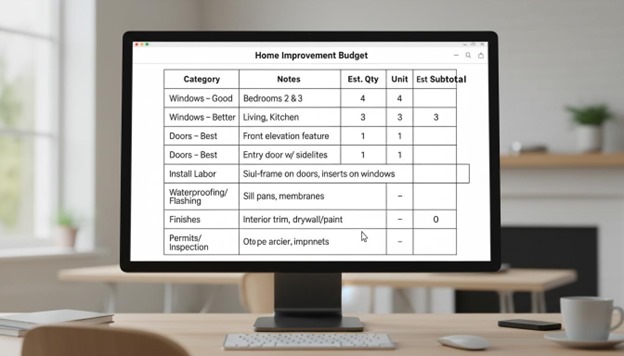
7) Pull It Together: Budget Template

Pull It Together Budget Template

Use this framework to request apples-to-apples quotes and track decisions.

Category Notes Est. Qty Unit Est. Subtotal
Windows – Good Bedrooms 2 & 3 4
Windows – Better Living, Kitchen 3
Windows – Best Front elevation feature 1
Doors – Better Patio slider 1
Doors – Best Entry door w/ sidelites 1
Install Labor Full-frame on doors, inserts on windows
Waterproofing/Flashing Sill pans, membranes
Finishes Interior trim, drywall/paint
Permits/Inspection City permit + inspection


Tip: Keep a 5–10% contingency for hidden conditions like rot or non-conforming openings.

8) How Modern Windows & Doors Helps You Budget Confidently

  • Curated good-better-best options for easy comparison.
  • Transparent proposals that itemize products, labor, finishes, and permitting.
  • Professional installation following manufacturer specs and best practices.
  • Flexible scheduling to minimize disruption.

Next Step

Schedule your free consultation to get a tailored scope and a line-by-line proposal you can trust.

What Are the Most Valuable Homeowner Resources for Choosing Windows and Doors?

Selecting the right windows and doors is a significant decision that impacts your home’s energy efficiency, security, and aesthetic appeal. To make informed choices, it’s essential to leverage reliable homeowner resources that provide guidance on materials, styles, installation practices, and maintenance tips.
In this comprehensive guide, we’ll explore the most valuable homeowner resources available, helping you navigate the process of choosing and maintaining your windows and doors effectively. From understanding energy efficiency ratings to finding qualified installers, we’ll cover everything you need to make confident decisions for your home improvement project.

Table of Contents

  1. Understanding the Importance of Homeowner Resources
  2. Key Online Platforms for Window and Door Selection
  3. Government Programs and Financial Assistance
  4. Professional Consultations and Local Experts
  5. Essential Factors to Consider When Choosing Windows and Doors
  6. Understanding Energy Efficiency Ratings and Standards
  7. Material Options and Their Benefits
  8. Installation Considerations and Best Practices
  9. Maintenance Guides and DIY Tips
  10. Cost Considerations and Budgeting
  11. Why Modern Windows and Doors Is Your Go-To Homeowner Resource

Understanding the Importance of Homeowner Resources

Accessing comprehensive homeowner resources is crucial for making well-informed decisions regarding window and door installations. These resources offer insights into product quality, energy efficiency ratings, and installation best practices, ensuring that homeowners select options that align with their specific needs and preferences.
The window and door replacement market can be overwhelming, with countless manufacturers, styles, and features to consider. Without proper guidance, homeowners might make costly mistakes that could affect their home’s comfort, energy bills, and resale value for years to come. Quality homeowner resources help you understand the technical specifications, compare different options objectively, and avoid common pitfalls.
Utilizing trusted homeowner resources can lead to better investment outcomes, enhanced home comfort, and long-term satisfaction with your window and door choices. For example, understanding the difference between U-factor and Solar Heat Gain Coefficient (SHGC) can help you choose windows that are perfectly suited for your climate zone, potentially saving hundreds of dollars annually on energy costs.

Key Online Platforms for Window and Door Selection

Several reputable online platforms serve as excellent homeowner resources for selecting windows and doors:
Energy.gov – Your Primary Resource for Energy-Efficient Windows The U.S. Department of Energy’s comprehensive guide at energy.gov/energysaver/update-or-replace-windows provides invaluable information about window energy efficiency, including detailed explanations of performance ratings, climate-specific recommendations, and cost-benefit analyses. This resource helps homeowners understand when replacement makes financial sense and what features to prioritize based on their geographic location.
Efficient Windows Collaborative This platform provides detailed information on energy-efficient window options and performance ratings, offering tools to compare different window types and their expected performance in various climates. The site includes case studies showing real-world energy savings from window upgrades.
All About Windows This comprehensive resource offers expert advice on materials, styles, and installation considerations for windows and doors. It features detailed comparison charts, installation guides, and troubleshooting tips for common issues.
SoftLite Windows & Doors Features a dedicated homeowner resources section with product information and maintenance tips, including seasonal checklists and warranty information to help homeowners protect their investment.
National Fenestration Rating Council (NFRC) While technical in nature, the NFRC website provides the official energy performance ratings for windows, doors, and skylights, helping homeowners understand and compare the energy efficiency of different products.
These platforms empower homeowners with the knowledge needed to make confident decisions and avoid costly mistakes during the selection process.

Government Programs and Financial Assistance

Understanding available financial assistance programs is an integral part of homeowner resources. Government initiatives can help offset the costs associated with window and door upgrades:
Federal Tax Credits and Rebates The federal government offers tax credits for energy-efficient home improvements, including qualifying windows and doors. These credits can cover up to 30% of the cost (with caps) for products that meet specific energy efficiency criteria. For example, windows must have a U-factor of 0.30 or less and an SHGC of 0.25 or less to qualify.
U.S. Department of Energy’s Weatherization Assistance Program This program provides funding for energy-efficient home improvements, including window replacements, for eligible low-income households. The program can cover the full cost of upgrades, including professional installation and energy audits.
State and Local Incentive Programs Many states and local utilities offer additional rebates and incentives for energy-efficient upgrades. For example, California’s Energy Upgrade California program provides rebates of up to $1,500 for whole-house energy efficiency improvements, while utilities in the Northeast often offer instant rebates at the point of sale.
Home Equity Conversion Mortgage (HECM) This program allows homeowners aged 62 and older to convert home equity into funds for renovations, as detailed on USAGov. This can be particularly valuable for senior homeowners looking to improve their home’s energy efficiency and comfort.
PACE Financing Programs Property Assessed Clean Energy (PACE) programs allow homeowners to finance energy improvements through their property tax bills, spreading the cost over 15-20 years. This makes expensive upgrades more accessible by eliminating the need for upfront capital.
Leveraging these homeowner resources can make energy-efficient upgrades more accessible and affordable, often reducing the payback period significantly.

Professional Consultations and Local Experts

Engaging with local professionals is a valuable homeowner resource for personalized guidance:
Modern Windows and Doors Installation Services Professional installation is crucial for window and door performance. Our window installation services ensure proper fitting, sealing, and finishing that maximizes energy efficiency and longevity. Professional installation typically includes precise measurements, proper flashing techniques, and quality assurance testing.
Windows & Doors By Brownell Offers in-home consultations to discuss product options and installation processes, providing personalized recommendations based on your home’s architecture and your specific needs.
Mister Window Provides expert installation services with a focus on customer satisfaction and quality workmanship, including post-installation support and warranty services.
Certified Energy Auditors Many professionals offer comprehensive energy audits that can identify the most cost-effective improvements for your home. These audits often include blower door tests, thermal imaging, and detailed analysis of your home’s energy performance.
These experts can assess your home’s specific needs, recommend suitable products, and ensure proper installation, enhancing the overall value of your investment and preventing common installation issues that can lead to air leaks, water damage, or premature failure.

Essential Factors to Consider When Choosing Windows and Doors

When selecting windows and doors, several critical factors should guide your decision-making process:
Climate Considerations Your local climate significantly impacts the optimal window and door specifications. For example:

  • Cold Climates: Prioritize low U-factor ratings (0.20-0.30) and gas-filled double or triple-pane windows
  • Hot Climates: Focus on low SHGC ratings (0.25 or less) to reduce cooling costs
  • Mixed Climates: Balance both U-factor and SHGC based on your specific heating and cooling needs

Architectural Style Compatibility Choose windows and doors that complement your home’s architectural style. For instance:

  • Colonial homes: Double-hung windows with divided lights
  • Contemporary homes: Large picture windows or sliding doors
  • Craftsman style: Casement windows with prairie-style grilles

Security Features Modern windows and doors offer various security enhancements:

  • Multi-point locking systems
  • Laminated or tempered glass options
  • Reinforced frames and hardware
  • Smart lock integration for doors

Understanding Energy Efficiency Ratings and Standards

Energy efficiency ratings can be confusing, but understanding them is crucial for making informed decisions:

Rating What It Measures Good Range Excellent Range
U-Factor Heat transfer rate 0.25-0.30 Below 0.25
SHGC Solar heat gain 0.25-0.40 Below 0.25 (hot climates)
VT Visible light transmission 0.40-0.70 Above 0.60
Air Leakage Air infiltration rate Below 0.2 Below 0.1

ENERGY STAR Certification ENERGY STAR certified windows and doors meet strict energy efficiency guidelines set by the EPA. Products must meet specific performance criteria for different climate zones across the United States.
NFRC Labels The National Fenestration Rating Council (NFRC) provides standardized energy performance ratings that allow for direct comparison between products from different manufacturers.

Material Options and Their Benefits

Understanding different window and door materials helps you make informed choices based on your priorities:
Vinyl Windows and Doors

  • Benefits: Low maintenance, good insulation, cost-effective
  • Best for: Budget-conscious homeowners, moderate climates
  • Lifespan: 15-20 years
  • Example: Vinyl double-hung windows can cost 30-50% less than comparable wood windows while providing similar energy efficiency

Wood Windows and Doors

  • Benefits: Natural beauty, excellent insulation, customizable
  • Best for: Historic homes, high-end applications
  • Maintenance: Requires regular painting or staining
  • Lifespan: 20-40+ years with proper maintenance

Aluminum Windows and Doors

  • Benefits: Durability, slim profiles, low maintenance
  • Drawbacks: Poor thermal performance without thermal breaks
  • Best for: Commercial applications, modern architectural styles
  • Lifespan: 15-25 years

Fiberglass Windows and Doors

  • Benefits: Extremely durable, paintable, excellent insulation
  • Best for: Extreme climates, long-term value
  • Cost: Premium pricing but excellent longevity
  • Lifespan: 30-40+ years

Composite Materials

  • Benefits: Combines advantages of multiple materials
  • Best for: Homeowners wanting wood appearance with lower maintenance
  • Performance: Often exceeds single-material options

Installation Considerations and Best Practices

Proper installation is crucial for window and door performance. Key considerations include:
Measurement Accuracy Professional measurements ensure proper fit and prevent costly mistakes. Even small measurement errors can lead to significant problems:

  • Windows: Measure width, height, and depth at multiple points
  • Doors: Account for floor variations and structural settling
  • Rough openings: May need modification for new products

Weatherproofing and Sealing Proper sealing prevents air and water infiltration:

  • Flashing: Critical for preventing water damage
  • Caulking: Must be applied correctly and maintained
  • Weatherstripping: Should be high-quality and properly installed

Structural Considerations Some installations may require structural modifications:

  • Load-bearing walls: May need additional support when enlarging openings
  • Permits: Often required for structural changes
  • Building codes: Must comply with local requirements

Maintenance Guides and DIY Tips

Proper maintenance is essential for the longevity of your windows and doors. Reliable homeowner resources offer guidance on upkeep and minor repairs:
Seasonal Maintenance Checklist
Spring:

  • Clean windows and doors thoroughly
  • Inspect and replace weatherstripping
  • Lubricate hinges and locks
  • Check for air leaks around frames

Fall:

  • Apply caulk to any gaps or cracks
  • Test window and door operations
  • Clean and inspect hardware
  • Prepare for winter weather

DIY Maintenance Tasks

  • Cleaning: Use mild soap and water; avoid abrasive cleaners
  • Weatherstripping replacement: Most homeowners can handle this task
  • Minor caulking: Simple repairs that can prevent major issues
  • Hardware lubrication: Keeps mechanisms operating smoothly

When to Call Professionals

  • Structural issues: Sagging frames or difficult operation
  • Glass replacement: Requires special tools and expertise
  • Major air leaks: May indicate installation problems
  • Water damage: Can lead to serious structural issues

Real Simple’s Home Improvement Guide provides advice on which home repairs can be DIY projects and which require professional assistance, helping homeowners avoid costly mistakes while maintaining their windows and doors effectively.

Cost Considerations and Budgeting

Understanding the full cost of window and door replacement helps with planning and budgeting:
Typical Cost Ranges

Window Type Material Cost Range (Installed)
Double-hung Vinyl $300-$600
Double-hung Wood $600-$1,200
Casement Vinyl $400-$700
Casement Fiberglass $700-$1,400
Picture Vinyl $200-$500
Picture Wood $500-$1,000

Door Cost Ranges

  • Entry doors: $500-$3,000+ depending on material and features
  • Patio doors: $1,000-$5,000+ for sliding or French doors
  • Storm doors: $200-$800 for added protection and efficiency

Factors Affecting Costs

  • Size and complexity: Larger or custom sizes cost more
  • Material quality: Premium materials command higher prices
  • Energy efficiency features: Advanced features increase costs but provide long-term savings
  • Installation complexity: Structural modifications add to costs
  • Geographic location: Labor costs vary significantly by region

Return on Investment Quality windows and doors typically provide excellent ROI:

  • Energy savings: Can reduce heating/cooling costs by 10-25%
  • Home value: Typically recover 70-80% of investment at resale
  • Comfort improvement: Reduces drafts and noise significantly

Why Modern Windows and Doors Is Your Go-To Homeowner Resource

At Modern Windows and Doors, we are committed to being a comprehensive homeowner resource for all your window and door needs. Our team offers expert consultations, a wide range of high-quality products, and professional installation services tailored to your home’s requirements.
We understand the importance of informed decision-making and strive to provide the information and support you need throughout your home improvement journey. Our experienced professionals can help you navigate the complex world of window and door selection, ensuring you choose products that provide optimal performance, energy efficiency, and aesthetic appeal for your specific situation.
Our Comprehensive Services Include:

  • Free in-home consultations with detailed assessments of your needs
  • Energy efficiency analysis to help you maximize savings
  • Custom solutions for unique architectural requirements
  • Professional installation with quality guarantees
  • Ongoing support and maintenance guidance
  • Warranty protection for your peace of mind

What Sets Us Apart:

  • Local expertise with knowledge of regional climate considerations
  • Extensive product selection from leading manufacturers
  • Certified installation teams with years of experience
  • Customer-focused approach that prioritizes your satisfaction
  • Competitive pricing with transparent, no-surprise estimates

Ready to Enhance Your Home?

Empower yourself with the right homeowner resources by partnering with Modern Windows and Doors. We’re here to help you make informed decisions that will improve your home’s comfort, efficiency, and aesthetic appeal for years to come.
Whether you’re looking to replace a single window, upgrade your entire home, or install new doors, our team has the expertise and resources to guide you through every step of the process. From initial consultation to final installation and beyond, we’re committed to providing exceptional service and results that exceed your expectations.
Don’t let the complexity of window and door selection overwhelm you. With the right resources and professional guidance, you can make confident decisions that will enhance your home’s value, comfort, and energy efficiency.
Contact Us Today
Ready to get started on your window and door project? Contact us today to schedule your free consultation and take the first step toward improving your home’s comfort, efficiency, and aesthetic appeal.
Our team is standing by to answer your questions, provide expert guidance, and help you find the perfect windows and doors for your home. Let us show you why Modern Windows and Doors is the trusted choice for homeowners who demand quality, service, and results.